Compliance that works operationally
GDPR, DPO & Compliance Operations
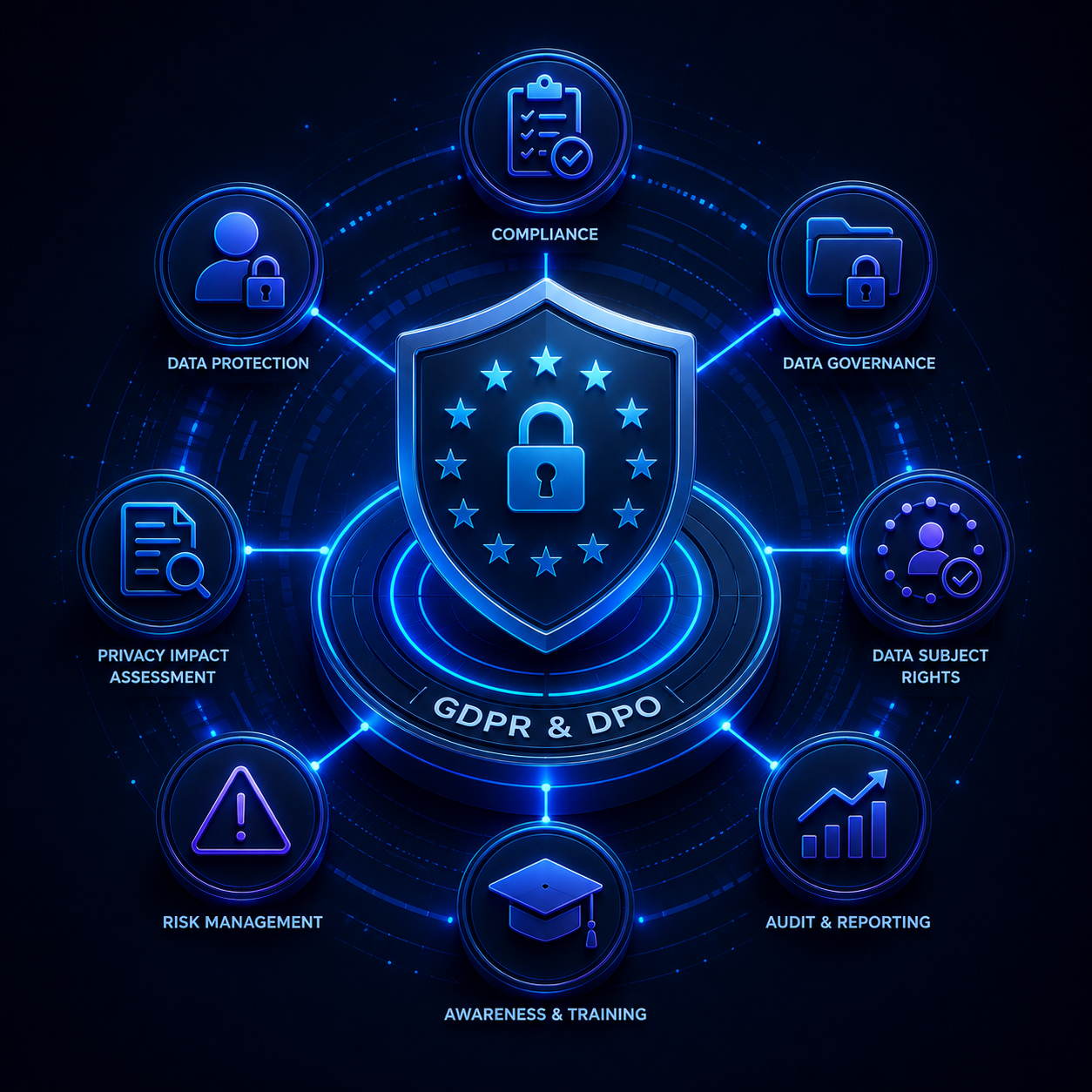
GDPR readiness, DPO support, data protection operations, vendor reviews, records of processing, and compliance process design.
Who this is for
Organisations that need GDPR and compliance work to be practical, owned, documented, and embedded into operating routines.
Good fit when
Signs you are in the right place.
These are the kinds of situations where this service is usually the most useful starting point.
Compliance work exists on paper, but ownership and routines are still weak.
Vendor, processor, or data-process reviews are happening inconsistently.
You need practical compliance operations rather than legal theory alone.
Representative situations
Typical situations this work is designed for.
These are example patterns, not named client stories.
Policies without process
A business has GDPR documents in place, but staff and managers still do not have practical routines for review, evidence, and ownership.
Vendor and process inconsistency
Vendor reviews, data handling checks, and records exist in fragments, making compliance harder to trust internally.
Pain points
The problem underneath the symptoms.
Compliance fails when it lives only in policy documents. It needs processes, accountability, evidence, and review routines.
Compliance documents exist, but operational ownership is unclear.
Vendor, processor, and data process reviews are inconsistent.
Records, policies, and processes are not aligned.
What I do
Practical work, not abstract advice.
Assess GDPR readiness and operational gaps.
Design compliance processes and records of processing routines.
Support vendor, processor, and policy alignment work.
What you get
Useful outputs, not vague advice.
A practical review of where compliance ownership, records, and review routines are weak.
Clearer process design for evidence, accountability, and recurring checks.
A structured next-step plan that makes compliance more usable operationally.
First phase
What the first phase usually looks like.
Review current policies, records, ownership, and day-to-day practices.
Identify where process and evidence are not matching the stated controls.
Define the first routines, templates, and review structures needed next.
Outcomes
What changes when the system is working.
Clearer compliance ownership.
More reliable review and evidence routines.
Better alignment between policy and day-to-day process.
Process
How the engagement moves from diagnosis to control.

01
Review current policies, records, vendors, and processes.

02
Identify operational compliance gaps.

03
Create practical routines, templates, and ownership.

04
Support ongoing review and improvement.
What this is not
Useful boundaries make the work clearer.
Saying no to the wrong fit early usually saves everyone time.
Businesses looking only for formal legal advice.
Teams that want a document-only exercise without operational ownership.
Organisations unwilling to connect policy requirements to real process changes.
Before you book
What a serious first conversation should clarify.
You do not need a full brief. You just need enough context to explain what feels broken, where it is showing up, and why now matters.
What is happening now that is creating friction, cost, delay, or uncertainty?
Where is the biggest pressure: ownership, software, reporting, repeated work, or delivery confidence?
What would need to change for this to feel under control again?
FAQ
Common questions.
No. This is compliance operations support. Legal advice should come from a qualified legal professional where required.
Next step
Book a review for GDPR & DPO
Use the call to clarify the problem, the operational cost of leaving it unresolved, and the most useful next step.
Best when the problem is already affecting day-to-day operations, reporting, delivery, or system confidence.
Book a Review Call